
If getting to appointments is part of what hurts, a video visit sounds like the obvious answer. No drive, no waiting room, no hard chair for forty minutes. For some parts of pain care it really is that good. For others it is no substitute for being in the room, and a clinic that treats it as one is cutting a corner.
This guide explains what a pain clinic can reasonably do over video, what has to happen in person, and how to tell which kind of visit you are being offered.
What telehealth does well
A lot of chronic pain care is conversation: how the last month went, what helped, what did not, what to try next. That part travels well.
- Follow-up visits. Once a clinician has examined you and you have a plan, many check-ins can happen by video. You report how you are doing, and the plan is adjusted.
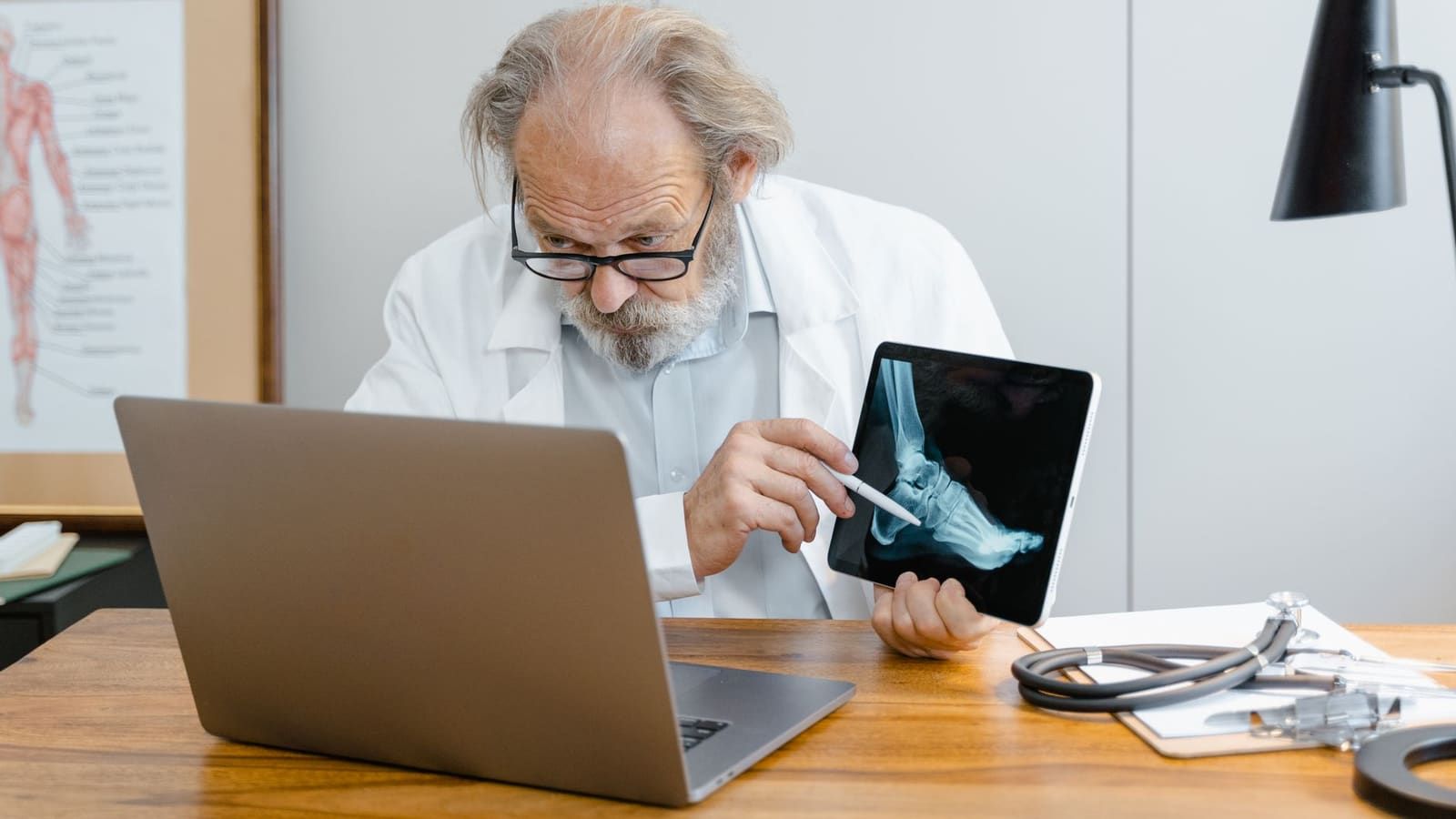
- Reviewing results. An MRI report, an X-ray or nerve testing can be explained on screen as well as across a desk, often better, since the clinician can share the image.
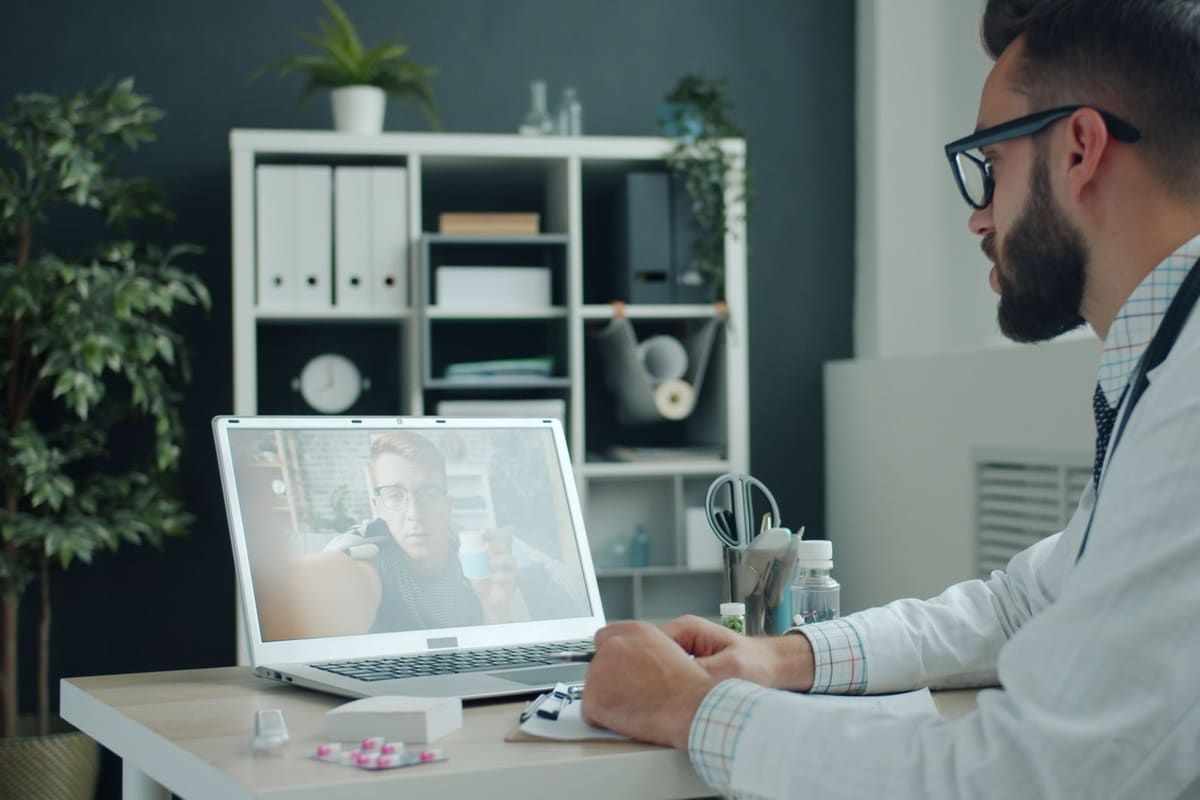
- Medication reviews. Going over what you take, side effects, interactions and whether a dose still makes sense is largely a conversation. You can hold the bottles up to the camera.
- Pain psychology. Cognitive behavioral therapy and related approaches for chronic pain are talk-based, and video-delivered programs are one of the better-studied areas of telehealth. For many people, results look broadly similar to in-person sessions, though no program works for everyone.
- Some physical therapy. A therapist can watch you move, teach and correct a home exercise program, and progress it over time. Hands-on treatment is a different matter.
- Deciding whether you need a specialist at all. A short video visit can help sort out whether your problem belongs at a pain clinic, with your primary care doctor, or with a surgeon.
What has to happen in person
The physical exam. A video call can show how you walk or how far you can bend. It cannot test reflexes properly, feel for tenderness, check strength against resistance, or run many of the maneuvers a clinician uses to work out where pain is coming from. For a new problem, or a change in an old one, that exam is often what the diagnosis rests on.
Procedures. Epidural steroid injections, nerve blocks, radiofrequency ablation and spinal cord stimulator trials all happen in a procedure room, usually with imaging guidance. Video can be used to discuss whether a procedure makes sense and to follow up afterward, but not to do one. Our guide to what an interventional pain clinic does covers those treatments in more detail.
Imaging and testing. Scans, nerve conduction studies and lab work need you to be somewhere. A clinic may order them after a video visit, but you will still be traveling for the tests themselves.
Monitoring for some medications. Clinics that prescribe opioids or other controlled medications for long-term pain typically ask for periodic in-person visits and may require urine drug testing. That is standard practice, not suspicion of you in particular.
The new-patient question
Many pain clinics want to see a new patient in person at least once, even if later visits move to video. That is a reasonable policy. A first visit is when the clinician examines you, reviews your history and imaging, and decides whether the pain clinic is the right place for you. Our guide to what to expect at a first pain clinic appointment walks through it.
Some clinics do offer a video intake for people who live far away or cannot travel easily. That can be fine for gathering history and planning tests. It is worth asking when, and where, the hands-on exam will happen.
Prescriptions over video
This is where you should be most careful, and where the rules are least settled.
Federal law has long required an in-person medical evaluation before a clinician prescribes many controlled substances, including opioids, through telehealth. Temporary exceptions introduced during the pandemic have been extended several times, and the details continue to change. A clinic should be able to tell you plainly which rules it follows today.
Whatever the current rules allow, be wary of any service whose main offer is a prescription. A website promising pain medication after a short video visit, with no exam, no records requested and no talk of other treatments, shows several of the warning signs in our guide to spotting a pill mill. A legitimate pain practice is selling a plan, not a prescription. For what that plan can include beyond medication, see chronic pain management without opioids.
Practical things to check
- Licensing. A clinician generally has to be licensed in the state where you are physically located during the visit. If you travel or live near a state line, ask.
- Insurance. Coverage for telehealth varies by plan, and Medicare’s telehealth rules have changed more than once in recent years. Ask the clinic and your insurer whether video visits are covered, and at what cost. Our guide to insurance and pain management covers referrals and prior authorization.
- The technology. Find out which app or link the clinic uses, test it beforehand, and have a phone number in case the connection fails.
- Your setup. A quiet, private room, decent light and enough space to stand up and move if the clinician wants to watch you walk or bend.
- Your list. Have your medications, recent results and questions written down, the same as for an office visit.
Finding a clinic that offers video visits
Our clinic pages do not yet show whether a practice offers telehealth, so the quickest way to find out is to call. When you search for pain clinics near you, note two or three that fit your needs, then ask each the same questions: Do you offer video visits? For which kinds of appointments? Do new patients need to come in first?
A clinic with a clear answer to all three is likely to be one that has thought about when video helps and when it does not.
The bottom line
Telehealth is a good fit for the parts of pain care that are talking, listening and adjusting a plan. It is not a fit for diagnosing a new problem, for procedures, or as a shortcut to medication. The best arrangement for many people is a mix: in person when the clinician needs to examine you or treat you, by video when what you need is a conversation.
This article is general information, not medical advice. Whether a video visit is appropriate for you depends on your condition and history, and is a decision to make with a licensed clinician.
Photography: Tima Miroshnichenko on Pexels