

A knee that hurts for months raises a practical question before any medical one: whose door do you knock on? Orthopedic surgeons are the obvious answer, and often the right one. But a growing share of knee pain is treated at pain clinics, and many people only find that out after being told they are “not a surgical candidate” and sent home with nothing else.
This guide explains what each kind of specialist does for a knee, which symptoms point to which office, and what a pain clinic can and cannot offer.
Most knee pain starts somewhere else
For a knee that has ached for a while without a clear injury, the usual first stop is a primary care clinician, and the usual first treatment is not a specialist at all. For knee osteoarthritis, the most common cause of lasting knee pain in adults over 50, major guidelines put the same things first: exercise and strengthening, usually through physical therapy, weight loss where it applies, and anti-inflammatory medication as a gel or a pill if it is safe for you.
That is not a brush-off. It is the part of the plan with the strongest evidence behind it, and both orthopedists and pain specialists will ask whether you have tried it.
Go now, not next month
A few knee problems should not wait for a referral. Get same-day care if you have:
- A hot, red, swollen knee with fever or feeling unwell. A joint infection can damage a knee quickly.
- A knee you cannot put weight on, or that looks deformed, after a fall or collision.
- A knee that is stuck and will not straighten or bend.
- A swollen, warm, painful calf, especially after surgery or a long period of sitting still. That can be a blood clot.
When an orthopedist is the right first specialist
An orthopedist’s core question is whether something in the knee is structurally wrong in a way that can be repaired. That makes orthopedics the natural start when:
- You had a clear injury. A twist with a pop, rapid swelling, or a knee that now gives way suggests a ligament or meniscus tear.
- The knee catches, locks or buckles. Mechanical symptoms point to a mechanical problem.
- Arthritis is advanced and limiting your life despite the first-line treatments, and you want to know whether a knee replacement makes sense.
- A child or teenager has knee pain, or pain follows a fracture.
Seeing a surgeon does not commit you to surgery. Good orthopedists operate on a minority of the knees they see. It also helps to know that scans over-call damage: meniscus tears show up on the MRIs of many people over 50 who have no knee pain at all, and trials have found that arthroscopic “clean-up” surgery for arthritis and wear-related tears generally does no better than physical therapy.
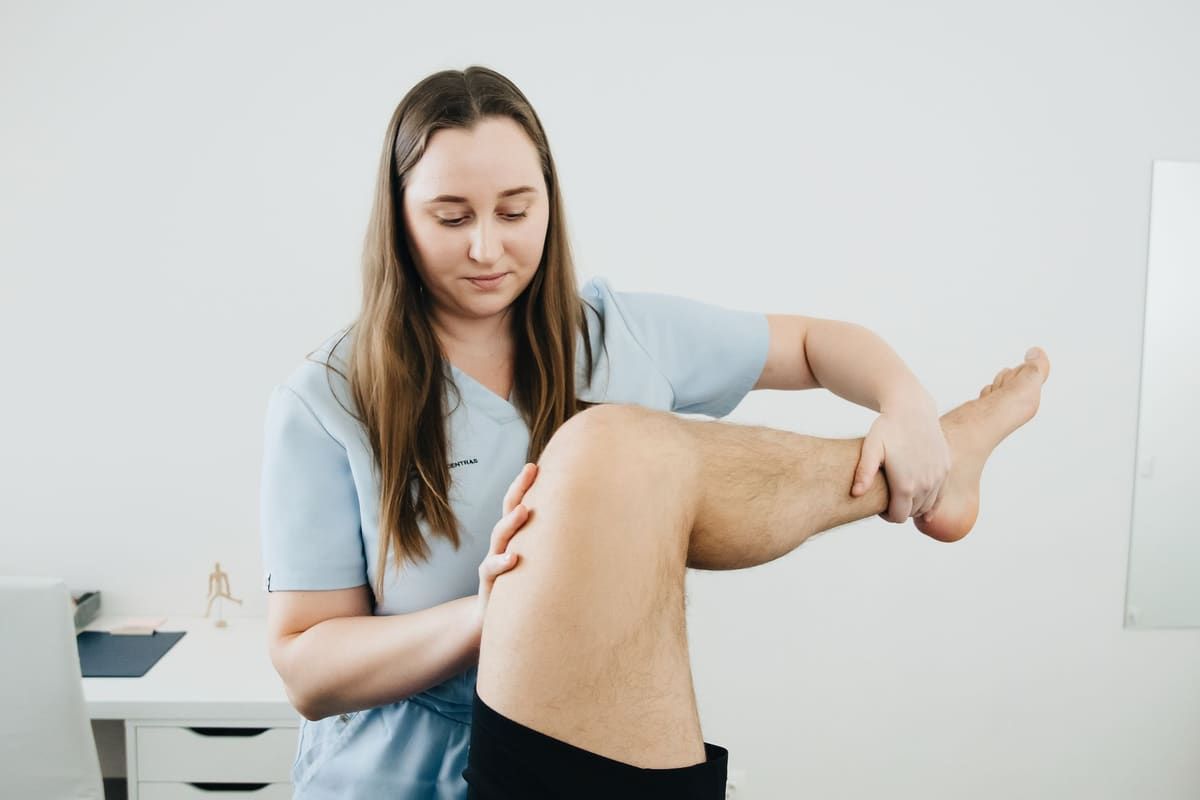
When a pain clinic makes sense
A pain specialist asks a different question: whatever the structure looks like, how can the pain be reduced so you can function? That fits several common situations.
- Arthritis that is not ready for, or not suited to, replacement. You may be considered too young, have heart or other conditions that make surgery risky, or simply not want an operation.
- Pain that continues after a knee replacement. Studies suggest something like one in ten to one in five people still have significant pain after a technically successful replacement. Your surgeon should first rule out infection or a loose implant. If the joint checks out, the problem is pain itself, which is what a pain clinic treats.
- Pain out of proportion to the scan, or burning, electric or skin-sensitive pain that suggests a nerve is involved.
- You have finished physical therapy and medication and need something more to stay active.
What a pain clinic can do for a knee
Steroid injections. Well supported for short-term relief of arthritis flares, typically for some weeks. They are not a long-term plan, and clinics limit how often they repeat them.
Hyaluronic acid (“gel”) injections. Widely offered, but the better trials show small benefits at most, and major guidelines do not recommend them routinely. Some insurers no longer cover them.
Genicular nerve blocks and radiofrequency ablation. The genicular nerves carry pain signals from the knee. A clinic first numbs them as a test. If that clearly helps, radiofrequency ablation uses heat to quiet those nerves for longer, often six months or more in people who respond. The evidence is promising but younger than for the spine version of the procedure, which we explain in our guide to radiofrequency ablation. It does not repair the joint. It turns down the signal.
PRP and “stem cell” injections. Heavily marketed and usually cash-only. Results for platelet-rich plasma are inconsistent from study to study, and the American College of Rheumatology currently recommends against both for knee arthritis. The FDA has repeatedly warned consumers about unapproved stem cell products. A clinic that leads with these, before the basics, deserves caution.
A good pain clinic also covers what is not a procedure: medication review, bracing, a physical therapy plan and sleep. Our guide to pain management without opioids goes through those options.
It is rarely either/or
The two specialties overlap. Many orthopedic offices give steroid injections, and many pain specialists trained in physical medicine examine joints all day; our guide to who’s who at a pain clinic explains the training behind each title. People often see both: the orthopedist to answer “can this be fixed?” and the pain specialist to answer “how do I live well with it in the meantime?”
A reasonable order for most people: primary care and physical therapy first, an orthopedist if there was an injury, mechanical symptoms or advanced arthritis, and a pain clinic when surgery is off the table, already done, or not yet wanted.
Before agreeing to any injection or ablation, it is worth running through our questions to ask before a pain procedure. And check coverage early, since genicular ablation in particular often needs prior authorization; see our guide to insurance and pain management.
Finding a pain clinic for knee pain
Our directory covers practices registered in pain medicine. It is not a list of orthopedic surgeons, so for a surgeon, ask your primary care clinician or insurer. When you search for pain clinics near you, call two or three and ask: Do you treat knee pain? Do you offer genicular nerve blocks and ablation? What do you try before a procedure?
This article is general information, not medical advice. Knee pain has many causes, some of them urgent, and only a licensed clinician who has examined you can tell you which one you have and what treatment is appropriate.
Photography: Gustavo Fring on Pexels